Looking back at 5 years of analyst sentiment on Fiserv stock – BUY ratings dominated the timeline.
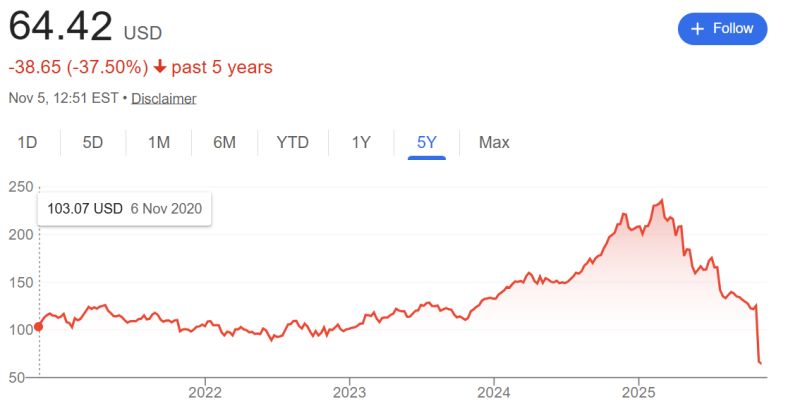
If the investor decided to buy the stock during the most optimistic period, after the 2025 Q2 earnings reports, the loss would be staggering, ~55%. The long horizon would not have helped as well, even a December 2020 starting date would have resulted in a loss of 36%.
Fiserv, a global fintech and payment company, gave harsh news to investors – they won’t hit the financial targets set by its former CEO. The news resulted in ~44% stock price free fall, wiping out USD 30 in market value.
From December 2020 to mid-2021, BUY ratings consistently hovered above 80%, just before the c. 25% decline in stock price. Ratings slowly changed to HOLD, but never to SELL. After the stock fully recovered and gained c. 75%, more analysts changed their ratings from HOLD to BUY.
Last week, the sentiment changed completely. After the news, more than half of the analysts changed their ratings from BUY to HOLD.
This example serves as a good reminder to be aware of analysts’ ratings and do your own research. In a typical earnings season, about 70% of companies produce positive “surprise” compared to analyst estimates. The reports themselves are valuable and contain rather accurate financial modelling.
The last thing investors should do is follow the BUY / HOLD / SELL ratings printed on the front page of these reports. They’re lagging indicators at best.

Source: FactSet, WSJ
Leave a Reply