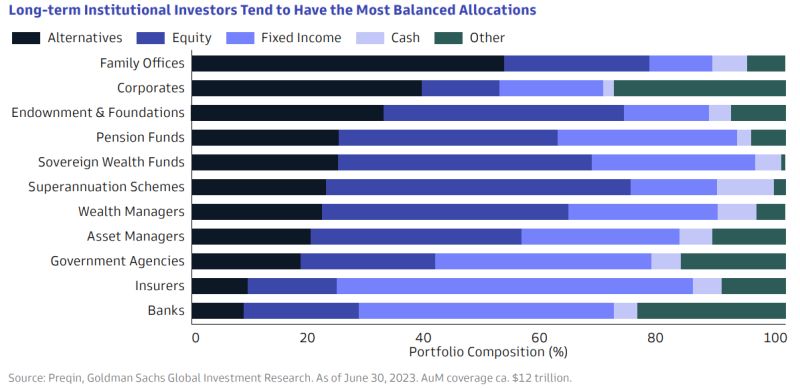
𝐖𝐡𝐚𝐭 𝐚𝐫𝐞 𝐭𝐡𝐞 𝐝𝐢𝐟𝐟𝐞𝐫𝐞𝐧𝐜𝐞𝐬 𝐢𝐧 𝐥𝐨𝐧𝐠-𝐭𝐞𝐫𝐦 𝐚𝐬𝐬𝐞𝐭 𝐚𝐥𝐥𝐨𝐜𝐚𝐭𝐢𝐨𝐧 𝐚𝐦𝐨𝐧𝐠 𝐝𝐢𝐟𝐟𝐞𝐫𝐞𝐧𝐭 𝐭𝐲𝐩𝐞𝐬 𝐨𝐟 𝐢𝐧𝐬𝐭𝐢𝐭𝐮𝐭𝐢𝐨𝐧𝐬?
Endowments and foundations are generally considered to be the most aggressive allocators to private markets, with an average allocation of about 33% of their portfolios, due to long-term horizon, potential for higher returns, diversification benefits, and access to unique investment opportunities.
However, other institutional investors are also increasing their allocations to private markets in search of higher returns. At least they did so in the past few years.
🔹Corporates are ranked second, accounting for 40% of the alternatives market.
🔹Family offices hold alternatives as more than 50% of their portfolio, putting them in the top position.
Regulated entities like banks and insurers are allocating a tiny portion, up to 10%, of their portfolio due to regulatory constraints, high liquidity needs, and associated risk.
Source: GS Asset Management Outlook 2024 / #AssetAllocation #AlternativeInvestments #WealthManagement
Leave a Reply